
Best neighborhoods to stay in madrid as a visitor
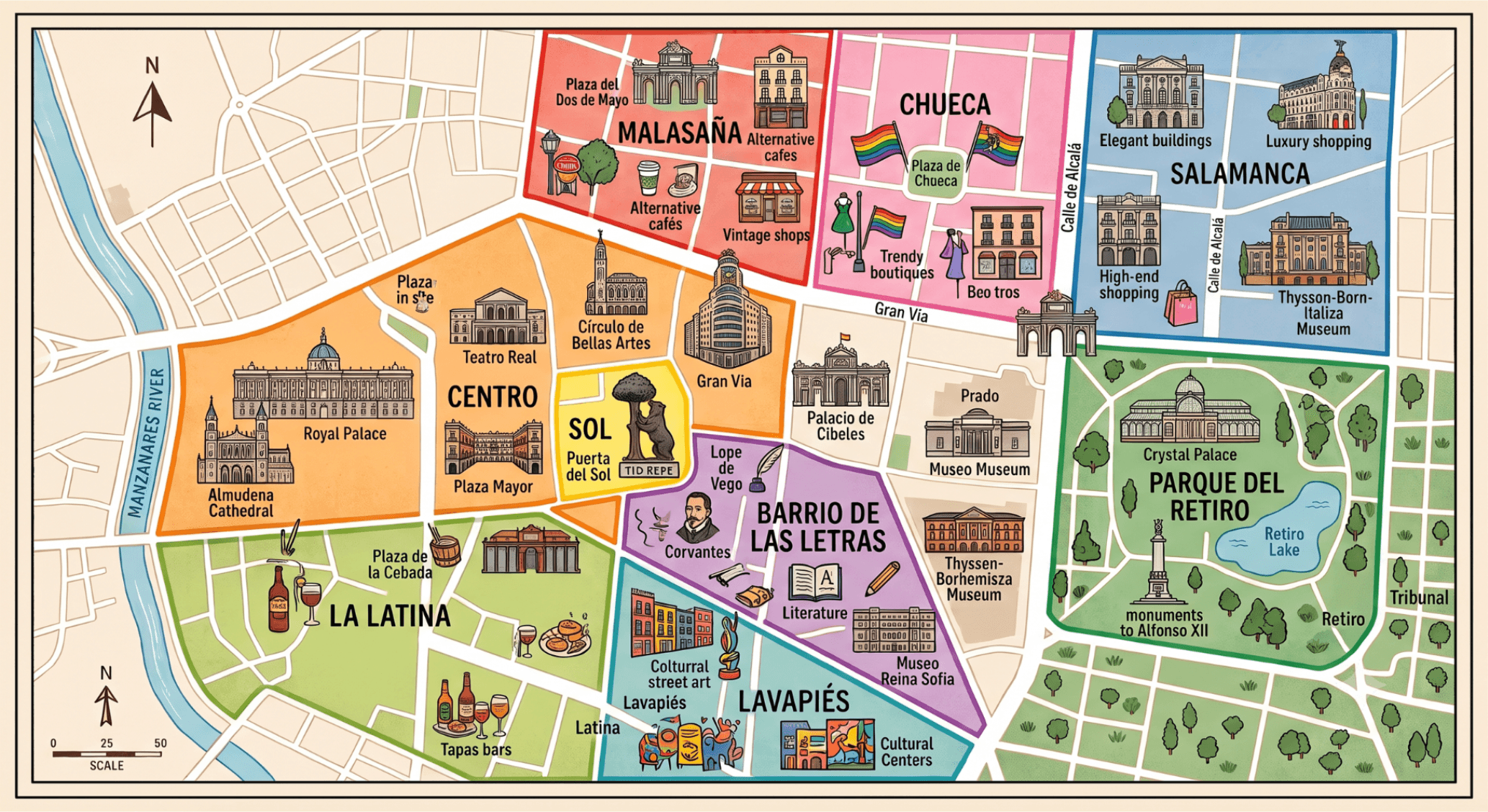
The best neighborhoods to stay in Madrid for most visitors are:
Centro/Sol for first-timers who want everything within walking distance.
Malasaña and Chueca for design, nightlife, and creative energy.
La Latina and Lavapiés for classic and multicultural Madrid.
Las Letras for a central-but-calmer literary quarter.
Salamanca for a quieter, more refined base.
The right one depends on how you like to travel — here's how to choosE:
Madrid is a city of neighborhoods — barrios — and each one is a different version of the same city. Where you stay shapes your whole trip: what you hear in the morning, where you have your coffee, how far you walk, who you meet. Most of central Madrid is compact and well-connected by the Madrid metro, so there's no wrong answer. But there's a right answer for you. (For official, up-to-date neighborhood and event information, the city's tourism board ,esMadrid, is the best primary source.)
We put this guide together the way we'd tell a friend arriving next week: honestly, with the trade-offs named. Here are the best neighborhoods to stay in Madrid, and who each one is for.
How to choose the best neighborhood to stay in madrid
Before the list, three questions worth asking yourself:
How central do you want to be? Sol is the geographic heart — everything radiates from it. Stay there and you'll walk to most sights. Stay further out and you'll trade a few metro stops for quieter streets and lower prices.
What do you want your evenings to sound like? Some barrios hum until 3am. Others go quiet after dinner. Neither is better — but they're very different if you value sleep.
Are you here for the sights, the food, the nightlife, or the feeling of living somewhere? Madrid rewards all four, just in different postcodes.
MADRID NEIGHBORHOODS at a glance
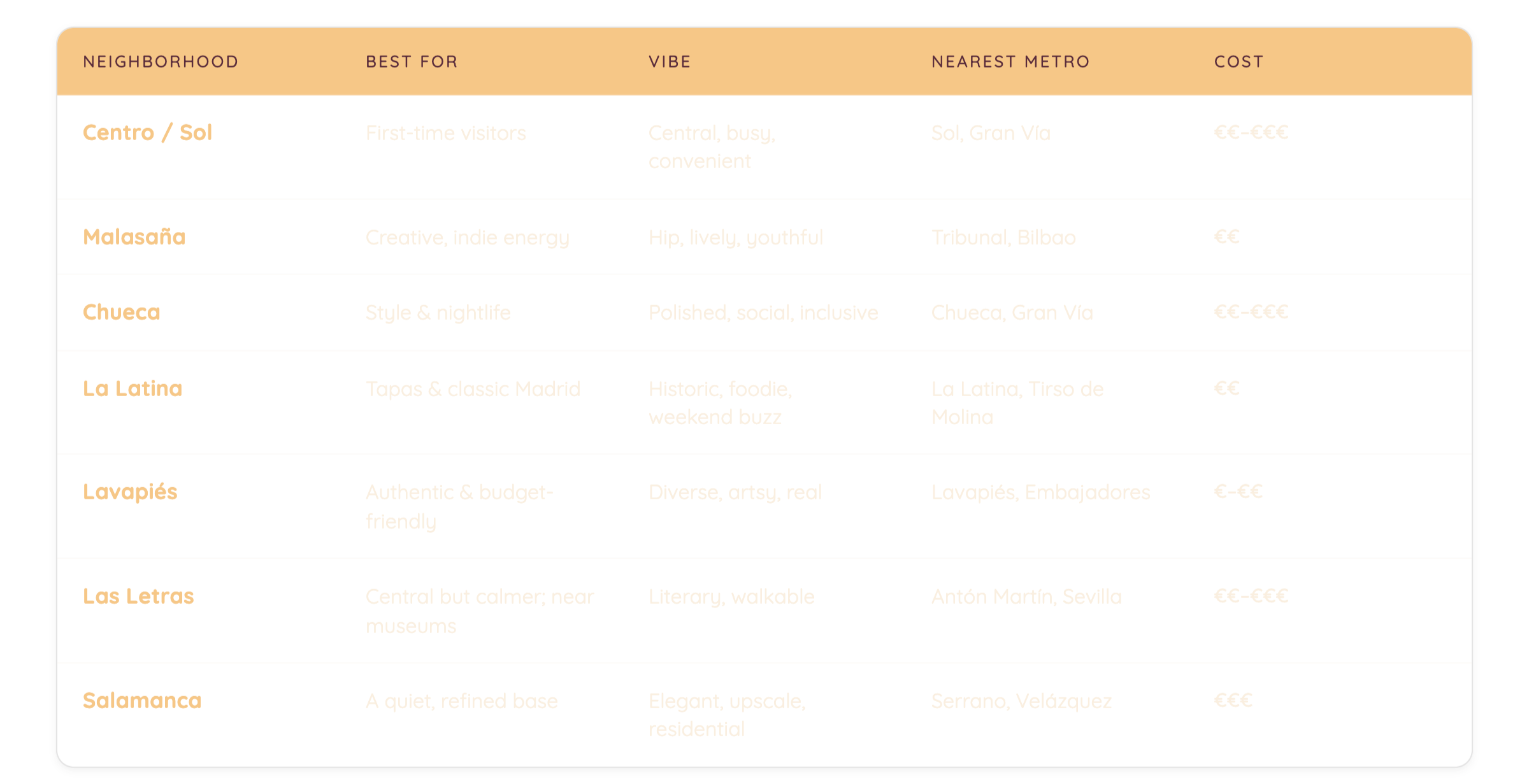
Madrid neighborhood guide
Centro & Sol — best for first-time visitors who don’t mind the bustLING TOURISTS
If it's your first trip and you want to step out the door into the middle of everything, stay in Centro around Puerta del Sol. This is the literal center of Spain — the "kilómetro cero" plaque is here — and it puts the Royal Palace, Plaza Mayor, Gran Vía, and the major museums within a walk.
The trade-off is the trade-off of any city center: it's busy, can get VERY touristy, and is rarely quiet. But for a short trip where you want to maximize sightseeing on foot, few places in Europe are this convenient.
Getting around & cost: You're on top of Metro Sol (lines 1, 2, and 3) and Gran Vía, within walking distance of most major sights. It's one of the pricier areas to sleep (€€–€€€) — you're paying for the convenience.
Stay here if: it's your first time in Madrid, you are okay with being surrounded by touristy energy, you're short on days, and you want to walk everywhere.
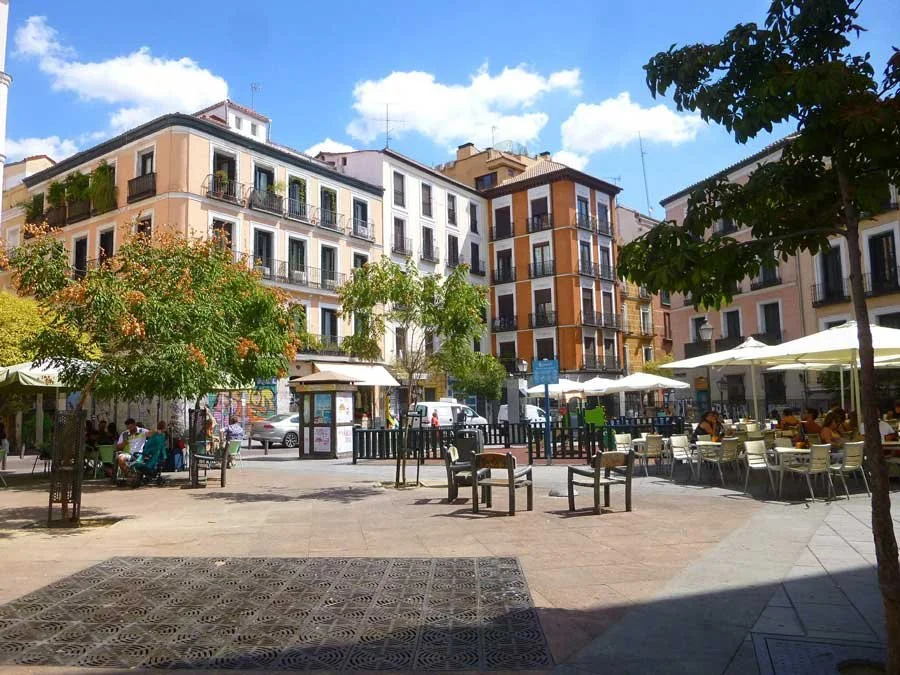
Malasaña — best for creative, indie energy
Malasaña is Madrid's cool older sibling: the birthplace of the '80s movida madrileña counterculture, now full of independent shops, vintage stores, specialty coffee, and small bars. It's central, walkable, and buzzing without being a full-blown party district.
Evenings here are lively — plaza tables, wine, conversation spilling onto the streets — so it suits travelers who want atmosphere close by. Light sleepers should ask for a room off the main squares.
Getting around & cost: Tribunal (lines 1 and 10) and Bilbao put you a couple of stops from everywhere, and Sol is about a 15-minute walk. Mid-range pricing (€€).
Stay here if: you like design, coffee, record shops, and a neighborhood with genuine character.
Chueca — best for style, inclusive vibes, and nightlife
Next door to Malasaña, Chueca is stylish, social, and the heart of Madrid's LGBTQ+ community. It's polished, friendly, and packed with good restaurants, cocktail bars, and boutiques — one of the most welcoming corners of the city, day or night.
It's central and energetic. If you want to be where things are happening and you don't mind a lively street at midnight, this is a strong pick.
Getting around & cost: Metro Chueca (line 5) and Gran Vía are right here, so you're central and walkable. Pricing runs mid to high (€€–€€€).
Stay here if: you want style, great nights out, and an inclusive, buzzing atmosphere.
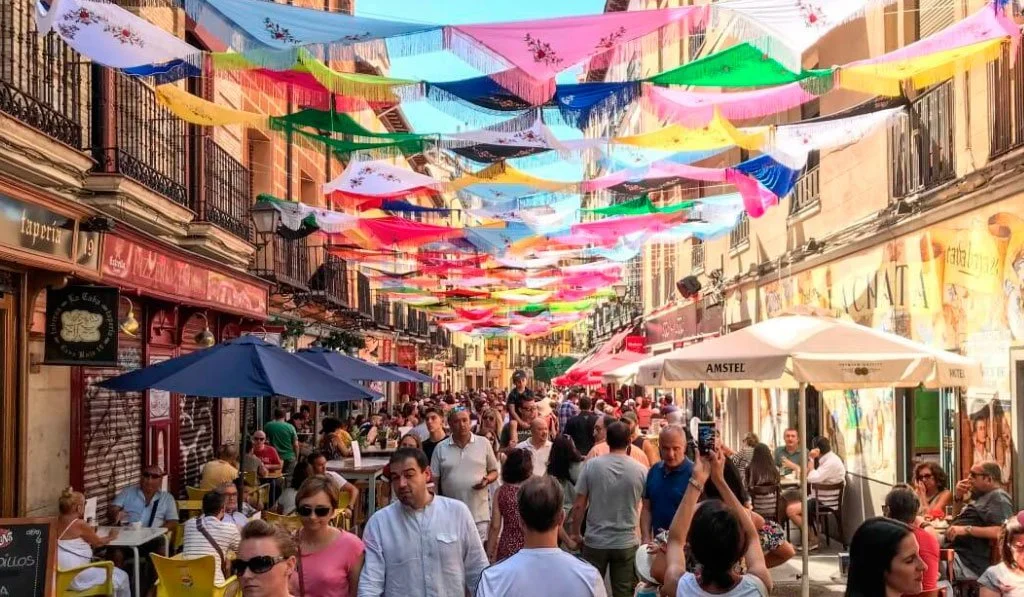
La Latina — best for classic Madrid and tapas
La Latina is where Madrid feels most like itself. Narrow medieval streets, tiled taverns, and the Sunday ritual of El Rastro flea market followed by vermut and tapas along Cava Baja — one of the best eating-and-drinking streets in the city.
It's central and full of life, especially on weekends, with a slightly more grown-up, local crowd than the party barrios.
Getting around & cost: Metro La Latina and Tirso de Molina (line 5) sit in the middle of it, and Sol is a 10-minute walk. Generally mid-range (€€).
Stay here if: you're here for the food, the history, and long lazy Sundays.
Lavapiés — best for multicultural Madrid
Lavapiés is Madrid's most diverse and creative barrio — a mix of old corralas, street art, artist studios, theaters, and some of the best international food in the city. It's central, a little rough around the edges in the best way, and deeply real. This is the Madrid that isn't performing for anyone.
It has become one of the most talked-about neighborhoods for exactly this reason: it's authentic, affordable, and alive.
Getting around & cost: Metro Lavapiés (line 3) and Embajadores connect you fast, and the center is a short walk. This is usually the best value of the central barrios (€–€€).
Stay here if: you want the real, lived-in Madrid over the postcard version.
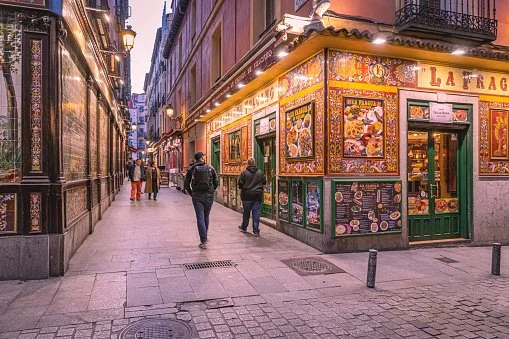
Las Letras (Barrio de las Letras) — best for central but calmer
The Barrio de las Letras, Madrid's literary quarter, sits between Sol and the great museums — the Prado, Reina Sofía, and Thyssen are all a short walk away. Quotes from Cervantes and Golden Age writers are set into the pavement. It's central and walkable but generally a touch calmer than Sol or Malasaña.
Getting around & cost: Antón Martín (line 1) and Sevilla are steps away, with the Prado, Reina Sofía, and Thyssen all walkable. Central pricing (€€–€€€).
Stay here if: you want to be near the art and the action without being in the loudest of it.
Salamanca — best for a quiet, refined base
Salamanca is Madrid's elegant, upscale district — wide grid streets, designer shopping along Calle Serrano, refined restaurants, and a residential calm. It's a little removed from the tourist core but well-connected, and it's the choice if you value quiet, space, and polish over being in the thick of it.
Getting around & cost: Metro Serrano and Velázquez (line 4) reach the center in a few stops. It's the most expensive area to stay (€€€), in keeping with its polish.
Stay here if: you want a calm, sophisticated home base and don't mind a short metro ride to the historic center.
Where to stay in Madrid if you're traveling alone
If you're traveling alone in Madrid, the best neighborhoods balance two things: being central and walkable (so you feel safe and connected coming home in the evening) and having natural places to meet people.
Malasaña, Chueca, La Latina, and the central barrios all score well here — lively but not intimidating, easy to navigate on foot and by metro.
Solo travelers also tend to think harder about what kind of place they stay in, not just which street. A private hotel room can be comfortable but isolating; a party hostel can be social but exhausting. That gap — comfort without loneliness, connection without chaos — is exactly the one Mosaico was built to close.
Choosing where to stay in Madrid — and what to stay in
Once you've picked your barrio, the second question is what kind of stay fits you. If you're comparing the best hostels in Madrid, you'll notice most of the well-reviewed ones cluster in exactly these central barrios — Sol, Malasaña, La Latina, and Lavapiés — because that's where the walkable, social side of the city lives. For a long time the choice has been the same everywhere: a hotel that's comfortable but isolating and expensive, or a hostel that's social but noisy and full of trade-offs.
Plenty of travelers want the best of both — a great night's sleep and real connection — and for years no one was building it.
That's the middle Mosaico is designed for: the refined comfort of a hotel and the community and value of a hostel, for modern travelers who want more from where they stay. En-suite bathrooms in every room, fresh linens and towels, toiletries, co-working, a café and bar, and bookable spa services — all curated, all included. If you're weighing the options, our guide to what a boutique hostel actually is is a good place to start.
Wherever you land in Madrid, choose the neighborhood that matches how you want your days to feel — and a stay that doesn't make you choose between comfort and connection.
FAQs
-
Most websites or blogs will tell you to stay in Centro, around Puerta del Sol. It's the most central part of the city, so you can walk to the Royal Palace, Plaza Mayor, Gran Vía, and the main museums… BUT it's super busy and a little too touristy.
I, Aparna, would tell you to stay in barrio La Latina - still central, still walkable to everything you would want to do, but it has more local charm and is less overrun with tourists.
-
Central, walkable barrios like Malasaña, Chueca, and La Latina are ideal for solo travelers — lively enough to meet people, easy to get home from in the evening, and well-connected by metro. Beyond the neighborhood, look for a stay designed for connection without the party-hostel chaos.
-
Malasaña and Chueca lead for bars, music, and going out, with La Latina best for a tapas-and-vermut evening rather than late clubbing. All three are central, so you won't need a long trip home.
-
It depends on your priorities. Central barrios (Sol, Malasaña, Las Letras) put you in the middle of everything but come with noise and crowds. Quieter areas like Salamanca or the edges of Chamberí trade a few metro stops for calm and space.
Madrid's metro is fast and easy, so "quieter" never really means "inconvenient."
-
Lavapiés and the streets around it tend to offer better value while still being central and full of character. Choosing a well-designed hostel or boutique-hostel over a hotel is also one of the biggest ways to stretch a Madrid budget without sacrificing comfort.
